
When Users Ignore the Sidewalk
Why the best product signals come from the paths people create, not the ones you design

When I was in the marching band at Kansas State and before we had an actual practice field, we rehearsed on a grassy quadrant between two parts of campus. There were sidewalks around it. Perfectly good sidewalks.
The problem was they were not the most efficient path to where people actually needed to go.
That field sat directly on what students considered the shortest route between classes. During rehearsals, people couldn’t cut across the grass like they normally would. They had to take the long way around.
You could see the frustration, not at us, but at the detour. We were just in the way of the route that made the most sense.
Back then, I called those informal routes “cow paths.” (Is this a Kansas thing? Or did anyone else use this term?) A cow path wasn’t designed or approved. It just appeared when enough people, or cows, decided there was a better way to get somewhere.
Today, I know the more formal term: desire paths. Long before I knew the name, I was watching one in action. The grass revealed something the sidewalks didn’t: how people actually moved.
There’s a well-known example at Ohio State University where planners did something unusual. Instead of forcing people onto planned walkways, they observed where students naturally walked. Over time, the dirt paths became the blueprint for the permanent sidewalks.
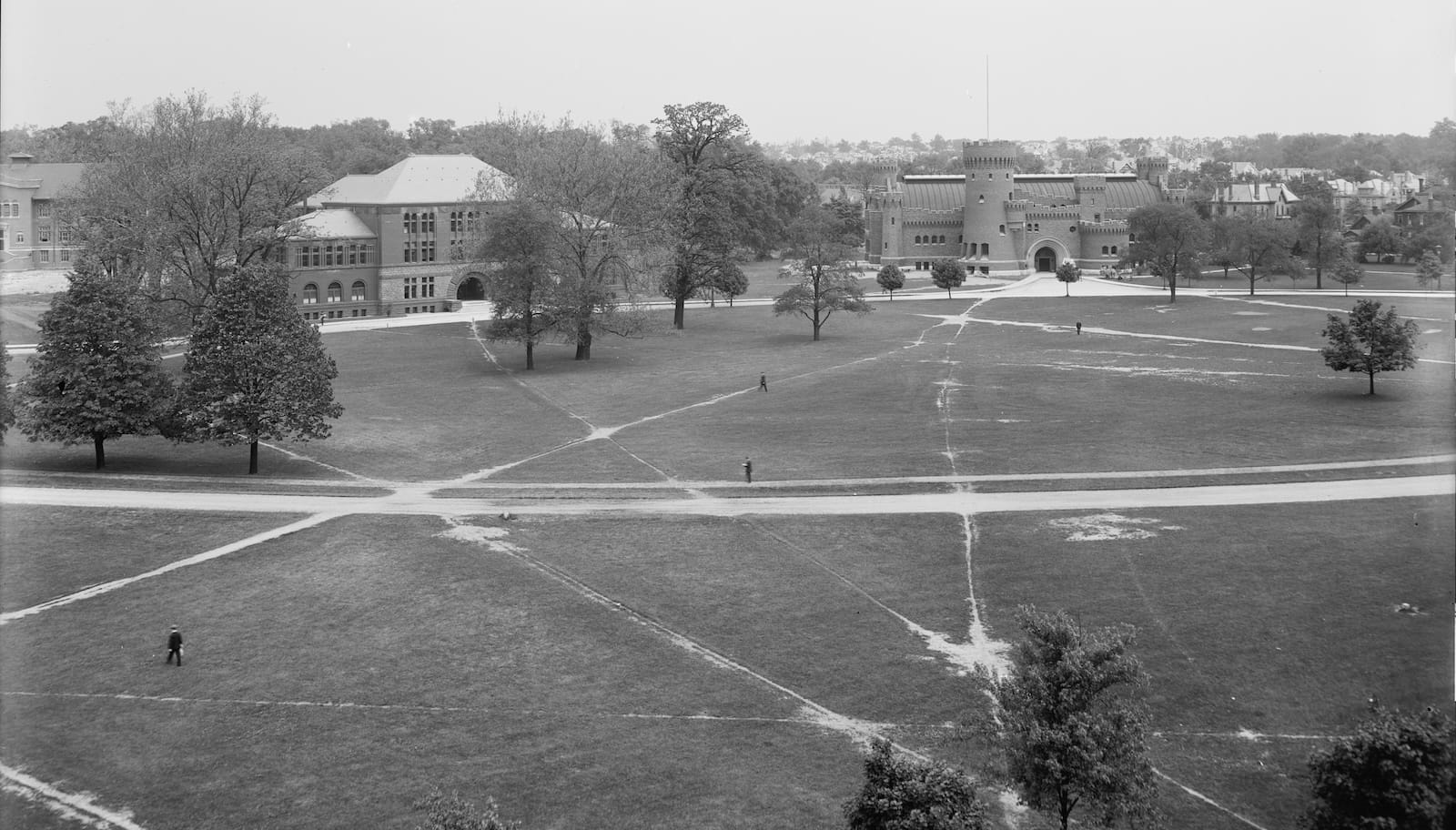
The design followed behavior, not the other way around.
Product work has its own version of this. Most failures aren’t engineering problems. They’re cases of building sidewalks without understanding the cow paths.
Teams gather requirements, align stakeholders, design workflows, and ship exactly what was asked for. Then users arrive and quietly do something else.
They skip steps.
They export data into spreadsheets.
They keep using email when a new collaboration tool exists.
They invent workarounds no one predicted.
They create their own cow paths, er, desire paths.
Too often, teams fall in love with the sidewalk they built. So when people step off it, the response is to pull them back: add friction, add reminders, add guidance. But the grass is telling you something important: this isn’t how the work actually gets done.

The behavior is the signal.
Every workaround is a clue. Every shortcut is research. Every detour is evidence the design doesn’t match reality.
The rise of AI makes this even more interesting.
Ask it a question and it will point you toward paths that already exist. That’s useful and sometimes essential, but it only knows what’s been documented. It cannot surface a path that hasn’t yet been written down or repeated enough times to become part of the data.
It shows you sidewalks. It shows you some established desire paths. But it cannot show you the moment a new one begins. and it cannot tell you whether any of those paths actually fit your users.
A solution that works somewhere else may still be a detour in your world.
Until you understand your customers, you’re just looking at paths. You don’t yet know which ones are sidewalks, which are cow paths, and which go nowhere at all.
AI is a map of the past. Product discovery is about noticing what’s forming now, and that still requires watching people closely enough to see where they step off the path.
You can design the sidewalk.
But you can’t decide where people walk.
That part is always revealed in the dirt.